VisiFlora — The Guide to
Clearer Vision, Less Strain,
and Healthier Eyes in 2026
Screen time, oxidative stress, ageing, and impaired gut absorption are driving an epidemic of eye discomfort for adults across the USA, UK, and Australia. VisiFlora's 22-ingredient formula was designed to address all four root causes simultaneously — naturally, without stimulants, and backed by a 60-day money-back guarantee.
- 22 plant-based ingredients targeting four root causes of visual decline
- Supports macular pigment, blue light filtration, and retinal circulation
- Unique gut-to-eye nutrient absorption support — missing from most formulas
- Marine antioxidants Astaxanthin, Kelp, and Ecklonia Cava for deep retinal protection
- Supports night vision, reduces dry eye, and lessens screen-related fatigue
- 60-day money-back guarantee · Made in USA · GMP-certified
We Spoke With Women and Men
Who Were Exhausted by Their Own Eyes
We collected accounts from hundreds of adults in the United States, the United Kingdom, and Australia — professionals, retirees, parents, shift workers — all with vastly different daily lives. When it came to their eyes, their experiences were almost identical: a slow, demoralising loss of the visual comfort and clarity they had taken for granted for decades.
Nobody described a dramatic event. They described a gradual accumulation — days that ended in headaches, mornings that began with dry, rough eyes, evenings where the television looked slightly blurred. And they described years of trying things that helped a little but changed nothing fundamentally.
Here is what people consistently reported trying — and the specific reason each approach fell short of producing lasting results:
Blue Light Blocking Glasses
Reduce incoming blue light exposure but do nothing to repair the macular pigment depletion caused by years of prior screen exposure, nor address the oxidative damage already accumulated in retinal cells.
Over-the-Counter Lutein Pills
Single-ingredient or low-ingredient formulas often ignore the gut-to-eye absorption problem: without adequate gut health, lutein and zeaxanthin from supplements may not reach macular tissue in therapeutic concentrations.
Artificial Eye Drops
Provide temporary surface lubrication but cannot address the nutritional deficiency and oxidative stress driving chronic dryness. Most users find they need drops with increasing frequency over time rather than less.
Standard AREDS2 Formula
Designed for patients with intermediate or advanced age-related macular degeneration — not everyday screen-related eye fatigue, early macular support, or the gut-eye absorption issues many adults in their 40s and 50s face.
Diet Changes Alone
Increasing leafy greens and oily fish provides beneficial eye nutrients — but gut dysbiosis (impaired gut health) means these nutrients may still not be adequately absorbed and transported to macular tissue where they are needed.
Screen Time Reduction
Genuinely helpful but impractical for working adults, and it does not reverse existing macular pigment depletion, restore retinal circulation, or repair the oxidative damage accumulated from prior years of screen exposure.
The pattern is consistent: people try solutions that address one aspect of the problem while leaving three others entirely untouched. The science of visual decline has become clear enough that this piecemeal approach can now be explained and improved upon. That is what VisiFlora was built to do.
What Peer-Reviewed Research
Now Tells Us About Eye Decline
The conventional message — "protect your eyes by reducing screen time and eating your leafy greens" — is not wrong. But it is incomplete in ways that explain why so many adults with healthy diets and good habits still experience progressive eye discomfort and declining visual performance. Here is what the clinical evidence now reveals about the four mechanisms driving the problem:
The Four-Stage Cycle That Makes
Eye Problems Progressively Worse
Once visual decline begins across all four mechanisms, each stage feeds the others in a self-reinforcing cycle. This is the core reason why partial solutions — addressing only one stage — produce limited and temporary results. The cycle must be interrupted at every stage simultaneously.
Screen Light Depletes Macular Pigment
Blue light from screens and sunlight steadily consumes the lutein and zeaxanthin that form the macula's natural protective layer, increasing vulnerability to oxidative damage.
Oxidative Stress Accumulates in Retinal Cells
With reduced pigment protection, reactive oxygen species accumulate in photoreceptors — producing the dryness, blurring, and end-of-day fatigue that worsen progressively with continued screen exposure.
Gut Dysfunction Blocks Nutritional Repair
Even when people eat well or take basic supplements, impaired gut health prevents adequate carotenoid absorption — meaning the macula cannot be replenished effectively through diet or standard supplementation alone.
Reduced Circulation Starves the Retina
Declining choroidal blood flow limits oxygen and nutrient delivery to photoreceptors — worsening all three prior stages, creating conditions for progressive macular vulnerability, night vision loss, and chronic dryness.
"Each stage reinforces the others. Depleted macular pigment worsens oxidative damage. Gut dysfunction prevents repair. Impaired circulation accelerates deterioration. A supplement that addresses only one of these stages — however good its formulation — cannot interrupt a four-stage cycle."
— synthesis of research on the gut-eye axis, macular carotenoid metabolism, and retinal microcirculationIntroducing VisiFlora: Built Around
How Vision Actually Works
VisiFlora was formulated with a specific design philosophy: rather than optimising one aspect of eye health and presenting it as a complete solution, address all four mechanisms — macular pigment, oxidative protection, gut-to-eye absorption, and retinal circulation — through a carefully curated 22-ingredient formula. No single ingredient can do this. The combination is the formula.
Manufactured in a GMP-certified facility and formulated with non-GMO, plant-based and marine-sourced ingredients, VisiFlora is designed for long-term daily use by adults whose vision is being challenged by screen exposure, age-related changes, or the early onset of macular stress.
What particularly distinguishes VisiFlora is the inclusion of marine-sourced ingredients — Astaxanthin (from Haematococcus pluvialis), Kelp Powder, Ecklonia Cava — that most plant-based formulas omit entirely. These compounds provide antioxidant and absorption-support mechanisms that terrestrial botanicals cannot replicate.
- ✓Marine triple antioxidant — Astaxanthin, Kelp, and Ecklonia Cava provide a depth of retinal protection unavailable from plant sources alone, including the blood-retinal barrier penetration that makes Astaxanthin particularly valuable
- ✓Gut-eye microbiome support — Chlorella Extract and Kelp Powder specifically address the gut absorption pathway for carotenoids, ensuring that the lutein and zeaxanthin in the formula actually reach macular tissue
- ✓Dual circulatory approach — Ginkgo Biloba addresses choroidal blood flow through vasodilation; Bilberry Extract supports rhodopsin regeneration and retinal capillary integrity from a different pathway
- ✓Saffron Extract inclusion — a breakthrough retinal neuroprotective ingredient with published clinical trial evidence for macular support that remains absent from the vast majority of competing eye formulas
VisiFlora's 22 Ingredients:
Mechanism, Evidence, and Purpose
Every ingredient in VisiFlora serves a defined role within the four-pathway vision support system. Here is a breakdown of the key active compounds — what they are, how they work, and why they are included:
The primary structural pigments of the macula, Lutein and Zeaxanthin form the natural optical filter that protects photoreceptors from blue light and high-energy visible light radiation. Supplementation increases macular pigment optical density (MPOD), directly reducing the blue light penetration that drives oxidative damage. The AREDS2 trial demonstrated a 26% reduction in AMD progression risk over five years with consistent supplementation.
Astaxanthin is one of nature's most potent antioxidants — approximately 6,000 times more effective than Vitamin C against singlet oxygen radicals. Critically, it crosses the blood-retinal barrier, providing direct antioxidant protection within photoreceptor cells themselves. Clinical trials demonstrate significant reduction in eye fatigue symptoms and improved visual accommodation in users with screen-related eye strain within four weeks of supplementation.
Kelp is rich in iodine, fucoidan (a sulphated polysaccharide with prebiotic properties), and trace minerals that support gut microbiome diversity. Fucoidan specifically has been shown to support beneficial gut bacteria involved in carotenoid metabolism — addressing the gut-to-eye absorption pathway that determines how effectively lutein and zeaxanthin from this formula reach the macula. This is the gut-eye support mechanism that distinguishes VisiFlora from most competitors.
Chlorella is a nutrient-dense green algae with well-documented detoxification properties — it binds to and facilitates excretion of heavy metals and lipopolysaccharide (LPS) toxins that can damage both gut barrier integrity and retinal tissue. By reducing LPS burden, Chlorella supports the gut-eye axis by maintaining the gut barrier that allows carotenoids to be absorbed and transported to macular tissue without interference from inflammatory mediators.
Ecklonia Cava is a brown marine algae with an exceptionally high concentration of phlorotannins — a class of polyphenols found only in marine organisms. These compounds are both lipid- and water-soluble, allowing them to cross the blood-brain barrier and the blood-retinal barrier — providing antioxidant protection in retinal environments that conventional plant polyphenols cannot access. Ecklonia Cava also demonstrates anti-inflammatory properties relevant to the retinal inflammation associated with progressive macular vulnerability.
Bilberry's anthocyanins have a specific biochemical affinity for retinal tissue — they support rhodopsin regeneration (the light-sensitive pigment in rod photoreceptors that enables low-light and night vision) and strengthen retinal capillary walls, improving microvascular blood flow to the retina. Its use for night vision support was documented as early as World War II and has since been validated in multiple controlled clinical trials, making it one of the most evidence-supported vision ingredients available.
Ginkgo Biloba's terpenoids dilate blood vessels and inhibit platelet aggregation, improving microvascular blood flow to the choroid — the vascular layer beneath the retina that provides all oxygen and nutrients to photoreceptors. Coleus Forskohlii stimulates adenylyl cyclase (increasing cAMP), which relaxes smooth muscle in blood vessel walls and supports healthy intraocular pressure. Together, this combination provides a comprehensive retinal circulatory support mechanism.
Euphrasia officinalis has been used in European herbal medicine for eye conditions for over two millennia — a duration of traditional use that predates modern clinical validation but has since been supported by research. Its active compounds (aucubin and caffeic acid esters) have documented anti-inflammatory and astringent properties relevant to conjunctival comfort, light sensitivity, and the chronic surface irritation associated with prolonged screen use.
Alpha Lipoic Acid is uniquely both water- and fat-soluble, allowing it to operate across every tissue type in the body and regenerate Vitamins C and E after they have been oxidised — extending the effective antioxidant protection across all retinal environments. In ocular health specifically, ALA has demonstrated protective effects against lens glycation (a mechanism in cataract development) and oxidative stress in retinal cells under both normal and diabetic conditions.
Zinc is present at the highest concentration of any mineral in the retina, where it is an essential cofactor for antioxidant enzymes (particularly superoxide dismutase) and supports Vitamin A metabolism for rod function. Copper is included to prevent the zinc-induced depletion of copper that can occur with high-dose zinc supplementation. Selenium activates glutathione peroxidase — the eye's primary enzymatic antioxidant defence. Vitamins C and E provide water- and fat-soluble antioxidant coverage respectively throughout the entire eye structure.
Taurine is one of the most abundant amino acids in retinal tissue, playing a critical structural role in photoreceptor cells and supporting the eye's natural moisture-regulation system. Depletion — which occurs naturally with age and oxidative stress — is associated with progressive photoreceptor dysfunction. Supplementation has demonstrated protective effects against light-induced retinal damage and supports the natural tear-film moisture balance that reduces the chronic dryness many screen users experience.
Lycopene concentrates in the crystalline lens and has been inversely associated with nuclear cataract risk in large-scale observational studies. Grape Seed proanthocyanidins reinforce capillary walls throughout the eye's vascular network. Rutin reduces inflammatory mediators at the ocular surface. Quercetin inhibits drusen formation (a precursor to AMD) and demonstrates direct anti-inflammatory activity in retinal pigment epithelial cells exposed to blue light. Together these form VisiFlora's comprehensive defensive perimeter against multiple simultaneous stressors.
Choose Your VisiFlora Package
All packages include free bonus digital guides and 60-day money-back guarantee.
Advanced
3 Bottles · 90-Day Supply
per bottle
$59
Regular $99
Free Shipping - Save $302
Order NowFREE U.S. Shipping
+ 3 Free Digital Bonus Guides
Ultimate
6 Bottles · 180-Day Supply
per bottle
$49
Regular $99
Free Shipping - Save $434
Order NowFREE U.S. Shipping
+ 3 Free Digital Bonus Guides
60-Day Money-Back Guarantee · GMP Certified · Made in USA · No Stimulants
VisiFlora Week by Week:
A Realistic Progress Guide
The biochemistry of macular pigment restoration and gut-eye absorption improvement follows defined biological timelines. Results do not arrive overnight — but they arrive reliably for users who maintain the protocol. Here is what most people experience:
Adjustment: Gut Support Begins Working
Some users notice mild digestive adjustment in the first few days as Chlorella, Kelp, and Ecklonia Cava begin interacting with gut microbiome composition. This typically resolves within a week. No visual changes are expected yet — the formula is building its nutritional foundation in gut tissue before benefits reach the retina.
Early Relief: Reduced Morning Dryness
The first noticeable changes are typically in morning eye texture and afternoon screen fatigue. The rough, uncomfortable morning-eye feeling begins diminishing as Taurine and Zinc support the eye's natural moisture regulation. Screen fatigue in the late afternoon and evening becomes measurably less severe for most users.
Comfort: Improved Screen Tolerance and Digestion
The gut-eye absorption pathway is better established by week three. Many users notice improved digestive comfort alongside the eye improvements — a sign the gut-eye axis is functioning better. Evening screen use becomes noticeably more comfortable, and some users begin tolerating longer reading periods without significant discomfort.
Energy and Early Night Vision Shift
After one full month, energy levels stabilise and night-vision improvements become noticeable. Road signs and headlights at night are easier to distinguish. Bilberry's rhodopsin support and Beta-Carotene's Vitamin A contribution are producing measurable improvements in low-light rod photoreceptor performance.
Significant Milestone: Reduced Eye Drop Dependence
This is often the most important phase for users who have been relying on artificial eye drops. Most report needing drops significantly less frequently — some eliminating them almost entirely — as VisiFlora's internal moisture support (Taurine, Eyebright) becomes fully active. Floaters become less distracting for many users, though they rarely disappear completely.
Full 60-Day Result: Comprehensive Clarity
The cumulative effect of two months of consistent supplementation becomes fully apparent. Screen text appears sharper. Night driving is notably more comfortable and less anxiety-inducing. Morning dryness is largely resolved. The difference is most apparent when users consciously compare how their eyes feel now versus how they felt before starting the protocol.
Why 60 Days Is the Right Evaluation Window
Macular pigment optical density (MPOD) — the primary visual protection mechanism — takes 4–8 weeks to measurably increase with consistent Lutein and Zeaxanthin supplementation. Evaluating VisiFlora at 30 days misses the most significant part of the benefit curve. The 60-day guarantee exists precisely to cover this full biological timeline.
Consistency Above All
The most important predictor of outcome across user reports is not the package size or the dose — it is daily consistency. Skipping days interrupts the cumulative macular pigment and gut absorption improvements the formula is building. Treat it as a non-negotiable daily supplement.
Habits That Amplify Results
The 20-20-20 rule (every 20 min, look 20 feet away for 20 sec) dramatically reduces ciliary muscle fatigue. Staying hydrated (2+ litres daily) supports tear film quality. Taking capsules with a fat-containing meal significantly improves absorption of fat-soluble carotenoids.
What Women and Men Report
After 60 Days with VisiFlora

"What I value most is that VisiFlora supports my vision without extra drops or complicated routines. My eyes feel less strained after long workdays, and night driving is clearer than it has been in years. I plan to continue using it as a permanent part of my routine."

"Eight to ten hours of screen time daily was leaving me with blurry, exhausted eyes by evening. After three weeks on VisiFlora I noticed sharper focus and meaningfully less eye fatigue throughout the afternoon. By the end of two months the difference was remarkable — my vision has sharpness and contrast that I'd lost gradually over the past few years."

"I started noticing dryness and occasional floaters in my mid-forties. Since adding VisiFlora my eyes feel more hydrated and the floaters are less distracting — they haven't disappeared but they no longer interrupt my concentration throughout the day. The improvement has been gradual but very real, especially after the second month."
VisiFlora vs. Available Alternatives:
An Evidence-Based Comparison
The vision supplement market is crowded. Here is how VisiFlora compares across the ten criteria that most meaningfully affect real-world eye health outcomes:
| Evaluation Criterion | VisiFlora | AREDS2 Formula | Basic Lutein Supp. | Artificial Eye Drops |
|---|---|---|---|---|
| Macular pigment support (MPOD) | ✓ Lutein + Zeaxanthin | ✓ | ✓ | ✗ |
| Gut–eye absorption pathway support | ✓ Kelp + Chlorella + Ecklonia | ✗ | ✗ | ✗ |
| Retinal microcirculation support | ✓ Ginkgo + Bilberry + Coleus | ✗ | ✗ | ✗ |
| Marine antioxidant complex | ✓ Astaxanthin + Ecklonia + Kelp | ✗ | ✗ | ✗ |
| Saffron Extract for retinal neuroprotection | ✓ | ✗ | ✗ | ✗ |
| Night vision support | ✓ Bilberry + Beta-Carotene + Zinc | Partially | Basic | ✗ |
| Natural eye moisture (non-drop) | ✓ Taurine + Eyebright | ✗ | ✗ | ✓ Temporary only |
| Total active ingredients | 22 | 5–6 | 1–3 | 1–2 |
| GMP-certified manufacturing | ✓ | Varies | Varies | Varies |
| Money-back guarantee period | 60 days | None | 30 days or less | None |
The Optimal VisiFlora Protocol:
Simple. Consistent. Effective.
VisiFlora requires no complex scheduling or lifestyle overhaul. The protocol is straightforward — but each element of it matters for maximising the formula's effectiveness:
Take 2 Capsules with Breakfast
A fat-containing meal significantly improves absorption of the fat-soluble carotenoids central to VisiFlora's visual benefits: Lutein, Zeaxanthin, Astaxanthin, Lycopene, and Beta-Carotene. Morning timing also aligns the formula's circulatory support ingredients with your peak daily visual demand period.
Hydrate Consistently All Day
Target at least 2 litres of water daily. Adequate hydration maintains the eye's aqueous humor quality and tear film composition — complementing VisiFlora's internal moisture support from Taurine and Eyebright and maximising the comfort benefits during screen use.
Use the 20-20-20 Rule
Every 20 minutes of screen use, look at an object at least 20 feet away for 20 seconds. This simple habit prevents ciliary muscle fatigue — the primary driver of end-of-day focus difficulty — and works synergistically with VisiFlora's antioxidant and circulatory support to minimise accumulating eye strain.
Stay Consistent for 60+ Days
Do not evaluate results before the 60-day mark. Macular pigment density, gut-eye absorption improvements, and retinal circulatory benefits are cumulative processes that build over 4–8 weeks. The guarantee covers this full period specifically to remove the financial pressure to judge results prematurely.
◆ Important Notes for Specific Users
If you are taking blood-thinning medications (warfarin, aspirin therapy), consult your healthcare provider before starting VisiFlora — Ginkgo Biloba has mild antiplatelet properties. Those who are pregnant, breastfeeding, under 18, or managing serious eye conditions should speak with a doctor before beginning any new supplement. Contact lens wearers typically find VisiFlora's moisture support ingredients reduce daily contact discomfort over time; if any lens intolerance increases, consult an optometrist.
Guarantee
Try VisiFlora for 60 Days —
Completely Risk-Free
Every VisiFlora order is protected by a 60-day, no-questions-asked money-back guarantee. The 60-day window is not arbitrary — it aligns with the actual biological timeline of the formula's key mechanisms. Macular pigment density measurably increases over 4–8 weeks of consistent Lutein and Zeaxanthin supplementation. The gut-eye absorption improvements from Chlorella, Kelp, and Ecklonia Cava require similar time. A 30-day guarantee would cut the evaluation window in half, making it impossible to fairly assess whether the formula is working.
If you have used VisiFlora daily for at least 30 days and have not experienced meaningful improvement in eye comfort, screen tolerance, or visual clarity, contact the support team at support@visiflora.com or call +1 (302) 200-3480 for a complete refund of your purchase price. No form required. No return interrogation. No complicated process.
Order VisiFlora Risk-Free →3 Exclusive Digital Guides
$214 Total Value — Yours Free

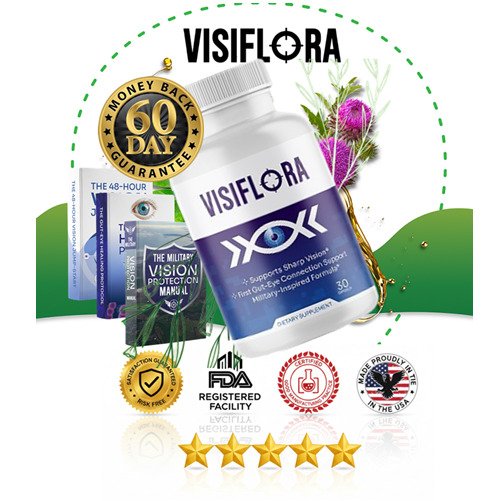
Military Vision Protection Manual
Exercises and focus techniques adapted from elite aviation pilots to reduce eye strain, sharpen focus, and support night vision comfort through sustainable daily habits.

Gut-Eye Wellness Protocol
A 7-day gut reset plan with 21 easy recipes specifically designed to support the gut-eye nutrient absorption pathway that makes VisiFlora's carotenoids more effective.

48-Hour Vision Jump-Start
Quick-start habits for reducing dry eye, light sensitivity, and visual strain through simple daily lifestyle adjustments that complement VisiFlora from the very first week.
Select Your VisiFlora Protocol
Free shipping on 3 and 6-bottle orders. All orders include bonus guides and 60-day guarantee.
Advanced
3 Bottles · 90-Day Supply
per bottle
$59
Regular $99
Free Shipping - Save $302
Order NowFREE Shipping
+ 3 Free Bonus Guides
Ultimate
6 Bottles · 180-Day Supply
per bottle
$49
Regular $99
Free Shipping - Save $434
Order NowFREE Shipping
+ 3 Free Bonus Guides
60-Day Guarantee · GMP Certified · Made in USA · Non-GMO · No Stimulants
Frequently Asked Questions
About VisiFlora
The Bottom Line:
An Honest Assessment of VisiFlora
After reviewing the peer-reviewed evidence for each of VisiFlora's 22 ingredients, the manufacturing standards applied, and the consistent user feedback from people across the USA, UK, and Australia, here is an honest, balanced summary of what VisiFlora does well and what realistic expectations should look like:
Strongest Point: Gut–Eye Axis
The inclusion of Chlorella, Kelp, and Ecklonia Cava to support the gut-to-eye carotenoid absorption pathway is the most clinically justifiable and distinctive feature of VisiFlora. This mechanism explains why people who have tried standard lutein supplements without result may experience different outcomes with VisiFlora.
Marine Antioxidant Depth
The triple marine antioxidant complex — Astaxanthin, Ecklonia Cava, Kelp — provides retinal protection at depths inaccessible to terrestrial plant antioxidants, including direct blood-retinal barrier penetration by Astaxanthin. This is a genuine differentiation from most plant-based competitors.
Circulatory Comprehensiveness
The Ginkgo Biloba + Coleus Forskohlii + Bilberry combination addresses retinal blood flow through three different mechanisms simultaneously — vasodilation, smooth muscle relaxation, and capillary wall integrity — providing more complete circulatory support than any single ingredient can achieve.
Honest Expectation: This Takes Time
VisiFlora is not a quick fix. The biological timelines of macular pigment restoration (4–8 weeks), gut microbiome modulation, and retinal circulatory improvement are real and cannot be rushed. Users who evaluate results at 2 or 3 weeks are not giving the formula a fair assessment. The 60-day guarantee is designed around this reality.
Manufacturing Standard
GMP-certified manufacturing is not universal in the supplement industry. It represents a commitment to ingredient purity, potency consistency, and batch quality control that lower-cost alternatives frequently cannot guarantee. This matters specifically for ingredients like Astaxanthin and Saffron Extract, where concentration determines efficacy.
The 60-Day Guarantee is Real Risk Removal
Covering the full 60-day benefit timeline with a refund guarantee is not common practice in this supplement category. It represents genuine confidence in the formula and removes the financial risk from finding out whether it works for you — which is the only way to honestly know.
"The eyes you have at fifty do not have to perform like the eyes of someone twenty years older. The clinical evidence for these ingredients is real, the gut-eye mechanism is scientifically sound, and the 60-day guarantee makes the evaluation zero-risk. The only remaining question is how much longer you would like to wait before finding out what your eyes feel like without the strain."
— editorial perspective, visifloora.comStart VisiFlora Today —
Zero Financial Risk
Save up to 51% on today's special price. All orders include free bonus guides and 60-day guarantee.
Advanced
3 Bottles · 90-Day Supply
per bottle
$59
Regular $99
Save $302
Order NowFREE Shipping
+ 3 Free Bonus Guides
Ultimate
6 Bottles · 180-Day Supply
per bottle
$49
Regular $99
Save $434
Order NowFREE Shipping
+ 2 Free Bonus Guides
Why 60 Days — Not 30?
The biology of macular pigment restoration follows a specific timeline: MPOD (macular pigment optical density) measurably increases over 4–8 weeks of consistent Lutein and Zeaxanthin supplementation. The gut microbiome changes that improve carotenoid absorption through Chlorella and Kelp require similar time. A 30-day guarantee would cut the evaluation window exactly in half — missing the phase where the most significant visual improvements typically occur. The 60-day guarantee was specifically set to align with the actual clinical timelines of VisiFlora's evidence-based ingredients. If the results are not there by day 60 — your money comes back in full. That is the only position worth taking.